Why Salt Air Is Hard on Metal Roofs in Corpus Christi
If you live anywhere near the water in Corpus Christi, you already know what salt air does to unprotected metal. It shows up as white chalky streaks on aluminum patio furniture, rust blooms on cheap hardware, and pitted chrome on boats. Your roof sits in that same environment 24 hours a day, and it takes the full brunt of the wind-driven salt spray coming off the bay and the Gulf.
The chemistry is simple. Salt deposits hold moisture against metal surfaces long after the rain has stopped. That trapped moisture, combined with warm coastal temperatures, accelerates oxidation. On a standard galvanized steel panel, the zinc coating can start breaking down years earlier than it would in a drier inland climate. Once that protective layer is compromised, rust moves fast, and a roof that should have lasted 40 years may need attention in 15.
This is why a coastal metal roofing project is not the same as a metal roof in San Antonio or Austin. The material selection, the coating system, and even the fasteners have to be chosen specifically for salt exposure. A contractor who installs the same package everywhere is not doing you any favors near the water.
Choosing the Right Metal and Coating for Salt Air
For homes close to the bay or on Padre Island, aluminum is usually the best starting point. An aluminum metal roof does not contain iron, so it cannot rust the way steel does. It forms a thin, stable oxide layer that protects itself, and it handles salt spray better than almost any other common roofing metal. The tradeoff is that aluminum is softer, so installation details matter more, and it typically costs more per square than entry-level steel.
If you prefer steel, do not settle for a basic galvanized panel. Look for a Galvalume substrate paired with a high-performance paint system such as PVDF (often sold under brand names like Kynar 500). These factory-applied coatings resist chalking and fading and add a barrier between the salt and the metal. A good Standing Seam Metal Roofing system in aluminum or coated steel is the gold standard for coastal homes because the concealed fasteners eliminate hundreds of potential leak and corrosion points.
What you want to avoid near the water is bare or minimally coated steel, and any panel where the cut edges are left exposed without proper treatment. Ask your installer to explain exactly what substrate and coating they are proposing and why it suits a salt air metal roof. A reputable contractor will have a clear answer, not a generic sales pitch.
Fasteners and Flashing: The Small Parts That Fail First
Homeowners tend to focus on the big panels, but the fasteners and flashing are where coastal roofs fail first. Standard zinc-plated screws will start corroding within a few years in salt air. For coastal work, you want stainless steel fasteners or at minimum heavily coated, corrosion-rated screws designed for marine environments. The cost difference is small compared to the expense of chasing leaks later.
Flashing is the other weak spot. Every penetration, every valley, every chimney and skylight edge needs flashing that will not rust out. In a salt environment, that means aluminum or stainless flashing, properly sealed with a compatible sealant. Mixing dissimilar metals is another common mistake: when two different metals touch in the presence of salt and moisture, galvanic corrosion can eat one of them away surprisingly quickly. An experienced installer knows which metals can safely touch and which need isolation.
If your home is in Rockport or Aransas Pass, you are dealing with the same salt exposure as the island, and the same rules apply. Do not let anyone talk you into standard fasteners to save a few dollars.
Retrofits, Replacements, and Wind Ratings on the Coast
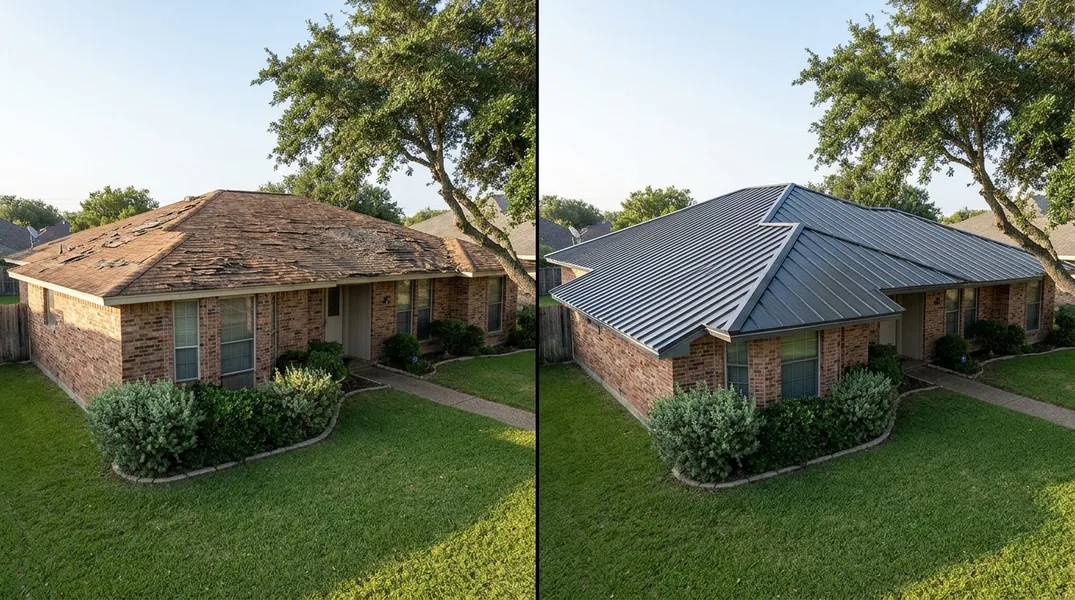
Many Corpus Christi homeowners ask whether they can go over their existing shingles instead of tearing off. A Metal Roof Over Shingles (Retrofit) can be a smart way to save on disposal costs, but it only works if the deck and structure are sound and if the new roof is detailed correctly for wind. Coastal wind uplift is serious, and a retrofit done poorly can fail in a storm. A full Metal Roof Replacement gives you the chance to inspect and repair the deck and to install a system rated for the wind zone.
Wind rating matters as much as corrosion resistance on the coast. Look for panels tested to high wind uplift standards and installed with the correct clip or fastener spacing for your exposure. A roof that survives salt for 40 years but peels off in a hurricane is not a good investment.
If you are not sure whether a retrofit or full replacement makes sense for your home, a free estimate is the right first step. An on-site inspection will tell you what your deck can handle and what system fits your budget.
Metal Roof Installation Near Me: Finding a Coastal-Savvy Contractor
Searching for metal roof installation near me in Corpus Christi will return plenty of options, but not all of them understand coastal corrosion. Ask specifically about the substrate, the coating system, and the fastener material. A contractor who specializes in inland work may propose a package that looks fine on paper but fails early near the water. Ask for references from homes on the island or near the bay, and ask how those roofs are holding up.
It also helps to ask about warranty terms. Some manufacturers offer enhanced corrosion warranties for coastal installations when specific products and fasteners are used. A good installer will know which products qualify and will document the installation so your warranty stays valid. If a quote seems unusually low, check what fasteners and coatings are included, because that is usually where corners get cut.
If you want to talk through options for your home, call Corpus Christi Metal Roofing at (361) 600-9211. We work in Ingleside and throughout the coastal area, and we can walk you through which system makes sense for your exposure, your roof shape, and your budget.
Metal Roof Cost in Corpus Christi: What to Budget
Homeowners often ask what a coastal-rated metal roof costs compared to a standard one. The honest answer is that a salt-ready system costs more up front, mainly because aluminum and high-performance coated steel cost more than basic galvanized panels, and stainless fasteners and upgraded flashing add to the total. But the gap is smaller than most people expect, and the long-term math usually favors doing it right the first time.
For a typical home, you can expect coastal metal roofing to run higher than a basic shingle roof, with standing seam at the top of the range and exposed-fastener panels at the lower end. The exact number depends on roof size, pitch, complexity, whether you are retrofitting or replacing, and which coating you choose. You can review general pricing on our site, but the only way to get a real number is an on-site assessment.
Think of it this way: a roof that lasts 40 years on the coast costs less per year than a cheaper roof that needs replacing in 15. When you factor in avoided repairs, avoided interior water damage, and the resale value of a metal roof, the coastal upgrade usually pays for itself. If you would like a clear, itemized free estimate for your home, reach out and we will put together a proposal that explains exactly what you are paying for.
Looking for a professional metal roofing contractor in Corpus Christi? Corpus Christi Metal Roofing responds fast for all your metal roofing needs.
Get a Free QuoteOur services: Metal Roof Installation · Standing Seam Metal Roofing · Metal Roof Replacement